Ecclesall Parish Church, Sheffield
Slick, atmospheric with a good dose of humour. Voodini and Rhodes’ work is a delightful interpretation of the Stevenson classic.
Sheffield’s Gothic theatre scene continues to grow, evolve and frighten through these seven hills. In the headlines there are an increasing number of wonderful horror-related big-budget theatre events past, present, future be it Little Shop of Horrors, Paranormal Activity, 2:22 A Ghost Story, and many others. A dark cornerstone of dread, horror in South Yorkshire is deservedly getting its time in the (black) sun.
This is exciting, but equally exciting is the smaller productions that are springing up through the city. There was “Ro££en” (2024) a Tarantino-esque thriller, “The King in Yellow” (2024) the Lovecraft-inspired mindtrip, but also the efforts of local writer/actor Paul Voodini and theatre technician/performer Kiera Rhodes’ visions in “A Very Dark Imagination” (2025) and “The Enfield Poltergeist” (2024), two different and intimate horrors treading the boards in the Lantern Theatre. It is all-in-all a joy to see these materials being developed, worked on, and cast into the theatre landscape.
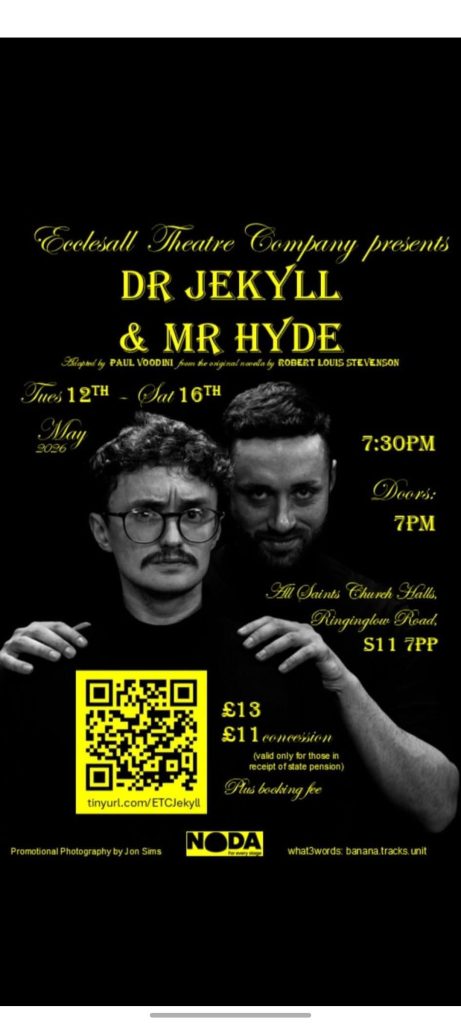
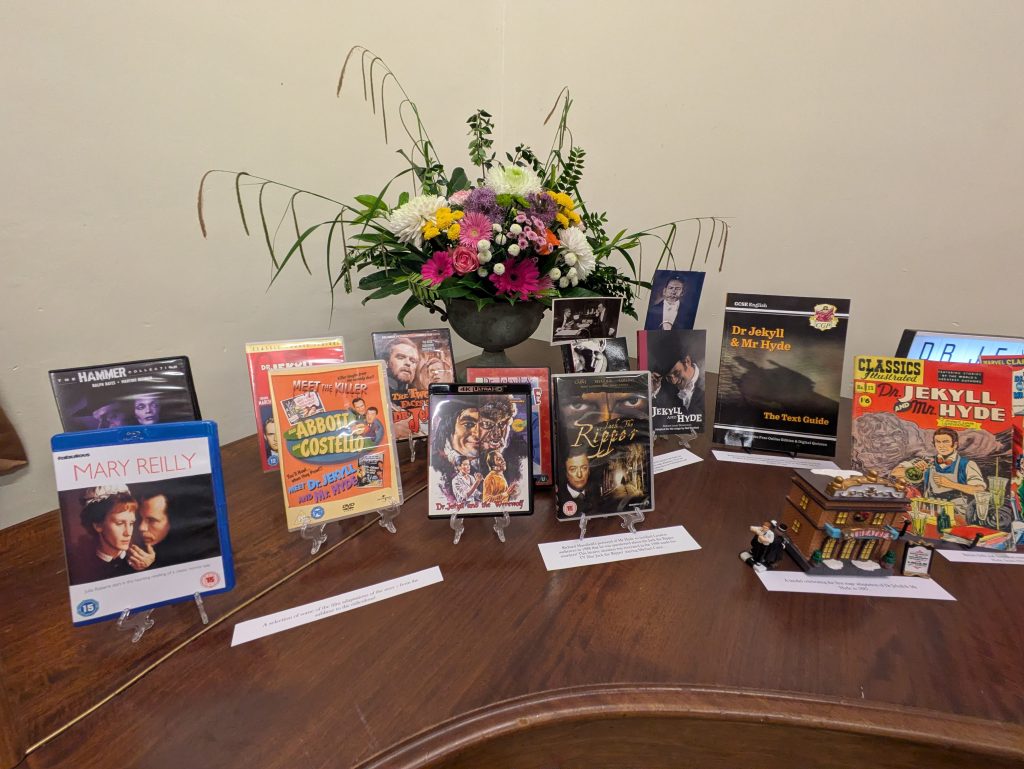
For the aforementioned Paul and Kiera, a new chapter has now been turned in the book of horror for the duo as they spread their bat wings a little more to work alongside Ecclesall Theatre Company to put on something bigger and more instantly recognisable. What we get is a new stage adaptation of Dr Jeykll & Mr Hyde with Ecclesall Theatre Company, which aims to rattle, scare and amuse an audience looking for a spooky night out. The original novella of this story was published in 1886 by Robert Louis Stevenson and is essentially about a man struggling with his violent impulses that are at odds with his social status as a doctor. As an experiment he develops a serum to remove these thoughts but ends up separating this alter-ego and causing a series of murders and civil unrest. This version is well known, but probably less known is the four-act play of the same name written by Thomas Russell Sullivan and Richard Manfield which debuted in the Boston Museum in 1887 (and itself was less of a success). Many adaptations have come to fruition, and now almost 140 years later in this leafy glade of Sheffield we sit to watch a new take.
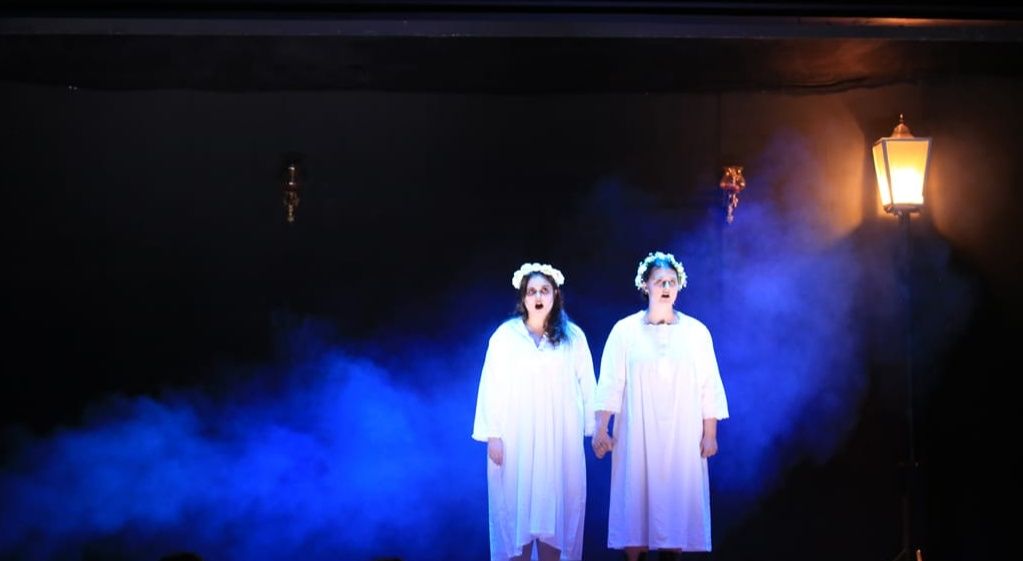
To do this, Voodini and Rhodes have expanded beyond performing the fruits of their own labour alone and have reached out to a number of actors to bring this sci-fi and horror morality tale to the stage. First let us mention the design. There is dry ice; a very good amount of dry ice. A peculiar thing to be obsessed over maybe, but this and many other aspects of the set design are pretty excellent in their execution (from Richard Gillett and Kiera Rhodes). Throughout the play there is a lamplighter who ignites the Victorian lamp in the background, then the fog rolls in and the light signifies the next event be it ghosts haunting the pea-soup alleyways or Dr Jekyll squirming under interrogation in his dressing room. Dr Jekyll’s lab is adorned with the expected books and scientific equipment but also LEDs decorations and lava lamp spitting its distinctive neon palate over the wood cabinets. This creative use of scenery early with these cheeky adornments hint at the comedy to come, and that (for the better), this play does not take itself too seriously.
There are some memorable characters in this show. There is Dr Jekyll’s cook (Rach Howard) whose trifle probably should have its own billing. Even in ghost-form the joy of layered dairy does not fade, and Olivia is able to make a recurring joke carry on and get stronger over time. Gabriel Utterson (Tom Pymer) is an intellectual friend played really well with a sense of charity and determination. His slightly uptight, defensive, and learned demeanour are presented here as harbouring a friendship bordering on a secretive gay love with Henry Jekyll. His performance has a subtlety played, and the character is written with heavy emotional stakes. This is like a candle to the original subtext by Stephenson who had homosexual male friends. The police Constable (Tom Davis) brings a likeable buffoon to the mix, but more than this is key to another choice that is fundamental to the feel of the show.
Remembering the police Constable role brings a smile. He has his simplistic charm, a bit like a horse painted with stripes trying to hang out with the zebras. He is especially good when two thirds in is the story puts the brakes on to introduce a story within a story for a rendition of the W. W. Jacobs story of the Monkey Paw, that dooming 1902 artifact. It is a great choice. Like adding lentils to a broth, it adds a further shadow to what is the menace of the play. The feeling and paranoia of the age and societial hysteria of womens’ murders taking place during Stevensons’ writing is captured like a loose leg in a beartrap. This play of Jekyll and Hyde is pretty much sitting in the roasting juices of Gothic influences not hyst because of the Money Paw but also the ending which is a funny link into the Frankenstein story. Brilliant choices to make an individual mark in the pantheon of horror, kudos to Rhodes and Voodini here.
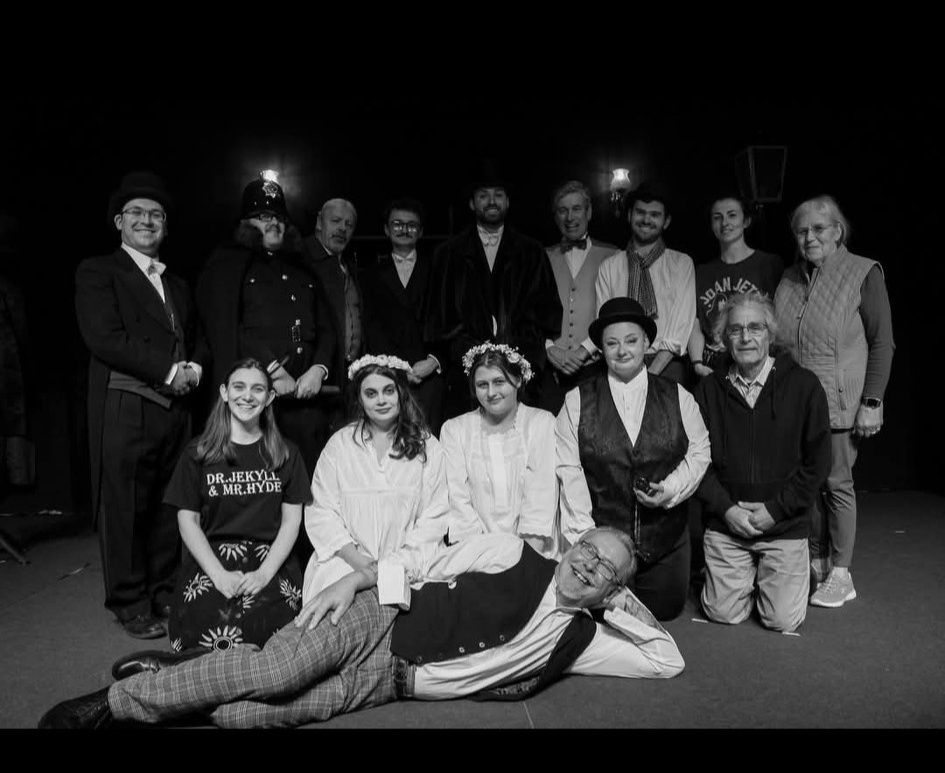
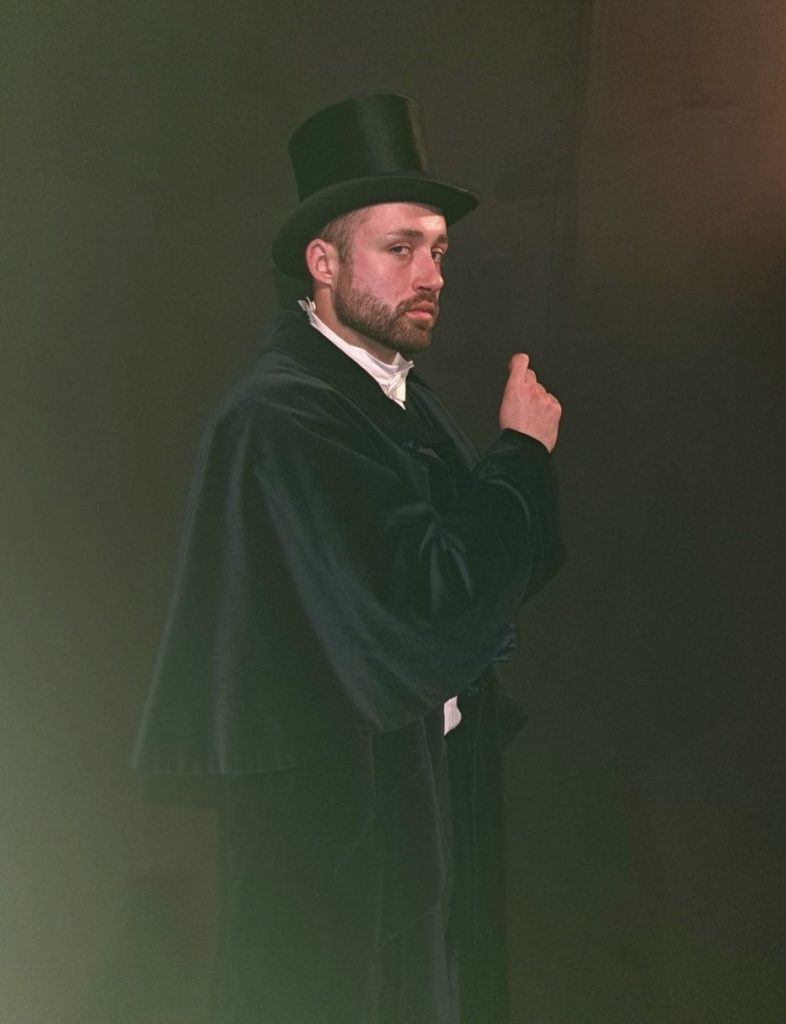
Detective Inspector Enfield (Graham Millar) is a big presence that looms over the play. Quite dogged, the proclaimed “sniffer” Enfield locks on to Jekyll’s character and keeps hounding him for the whole runtime. Millar’s scenes shine with him portraying a focused intuition; throughout he keeps hitting a bit of a brick wall and his rationality fails him (but he knows Jekyll is responsible somehow). We get some interesting glimpses into his confusion. He occupies a world detached from fantastical and theoretical one of the main character and Millar plays the character’s earthly wisdom like a rustic djembe unlike, “trying to give evolution a prod”. Dr. Henry Jekyll (David Barton) is played as an awkward science enthusiast, Barton has a nervous energy which doesn’t actually venture too far down the mad-scientist trope, he is quite grounded and believable. Barton has a good range of exasperated, rabbit-in-the-headlight looks; we see this as he is a genius, but not in the realm of lawlessness, and frequently gets caught up or challenged to which he is a like a rat trying not to drown. There is a dark wit to his scenes that the writing brings out, for example his sadness and relief of not missing out on trifle (it is that big a thing) and his amorality raises above the parapets on occasion as he never apologises or excuses Hyde’s behaviour, it is part of him. Daniel O’Key is excellent as Edward Hyde. He treads a fine line between etiquette-breaker, menacer and overall villain. His strength lies in his persuasion, he is charismatic and fully the wrong influence. Jekyll and the audience alike would follow this guy into hell; or at least go for a crazy night out with him. His make-up looked great and he made himself the centre of any scene he was in, be it encouraging his counterpart, committing unwanted advances, or his tortured realisation that he would end (after smugly believing the good Dr. did not have the tenacity to call an end to it all).
There are several great aspects to this place. The scene changes are great. Like a character popping out of a comic pane, the scene overlap with each other and in these comedy ensues be it the cast getting in each other’s way or a piece of furniture does not first go in just right. It takes elements of farce, and this goes down very well with the audience. It’s a nice touch; the scene changes have a distinct kinetic energy that keeps the interest high, and the story rolling along. It all looks very professional and well-rehearsed, and does add a nice bit of seasoning to the show as it is. Sound-wise there is an ominous drip, the sound of the rain in the street, it pushes a grim feeling of things being messed with that shouldn’t.
The whole thing is pretty snappy really. The scenes where the ghosts were singing to the audience were helpful pointers going forward, the audience always knew what was happening. Clear and big on the discussions of morality and choice (particularly between Utterson and Jekyll), the play brings the philosophy out and we love the added comedy and lightness sprinkled in without diluting the feel and message of the play. Not too heavy on the weighty thoughts and themes, it also doesn’t sacrifice what makes the story timeless. A great night, and a niice collaboration with sharp acting and writing, we look forward to their next adventure.
If you wish to check out Ecclesall Theatre Company, head over to the Facebook page here.
Many thanks for your kind review!