@Drama Studio, Sheffield, S10 2TD : 30/09/26 – 03/10/26
Adapted by: Sam Islam
Producer: Ross Carey / A Prod: Lily Watson
Directors: Monica Gallo & Erin Whyte / A Dir: Roberto Rowinski
JOINT POSTED WITH:
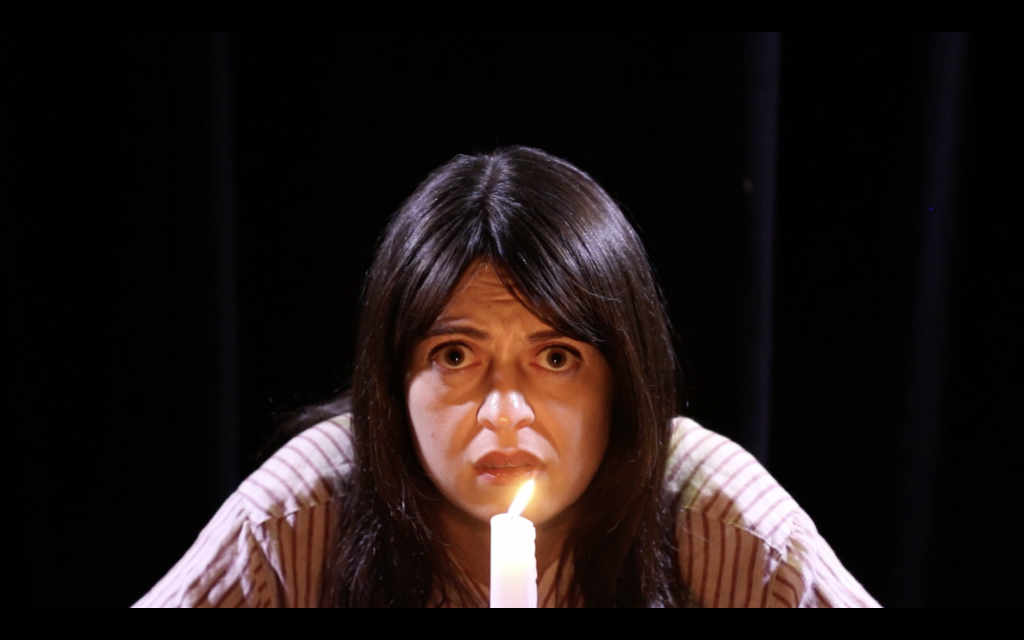
Credit: Mark Todd
ACTORS:
THE GOVERNESS (Hollie Warman), MILES (David Osamudiamen), FLORA (Abbie Wright), MRS. GROSE (Lindsey Ladhams), JAMES WINTERBOURNE (Glen Gregory), ISABEL HAWTHORNE (Lily Luty), DAISY WINTERBOURNE (AIMEE YOUNG), OWEN WINGRAVE (Tom Bickley), ROSE WINGRAVE (Phoebe Grana), THE STORYTELLER (ROBERT ROWINSKI),
“With a good ensemble cast, sustained writing, and some excellent set-pieces, the play draws you into this world that combines the Gothic, Supernatural and Folk Horror as a fun watch this spooky season”
The Spooky Season is indeed upon us.
As the weather is starting to cool, the leaves are clinging to the ground in terror, and the trees are putting on their best face it is the time for our favourite type of horror media to come out and greet us in the chill.
This week we went to see “The Turning at Bly Manor”, the latest show from The Company, a recognised and active community theatre group with strong ties to the University of Sheffield that perform at the lovely Drama Studio. “The Turning at Bly Manor” is a kind of golem of a play having been assembled into an original story through the inspirations of Henry James’ “The Turning of the Screw” and Mike Flanagan’s “The Haunting of Bly Manor”. It is a case of when a classic story meets a streaming service gem in a bar and hit it off.
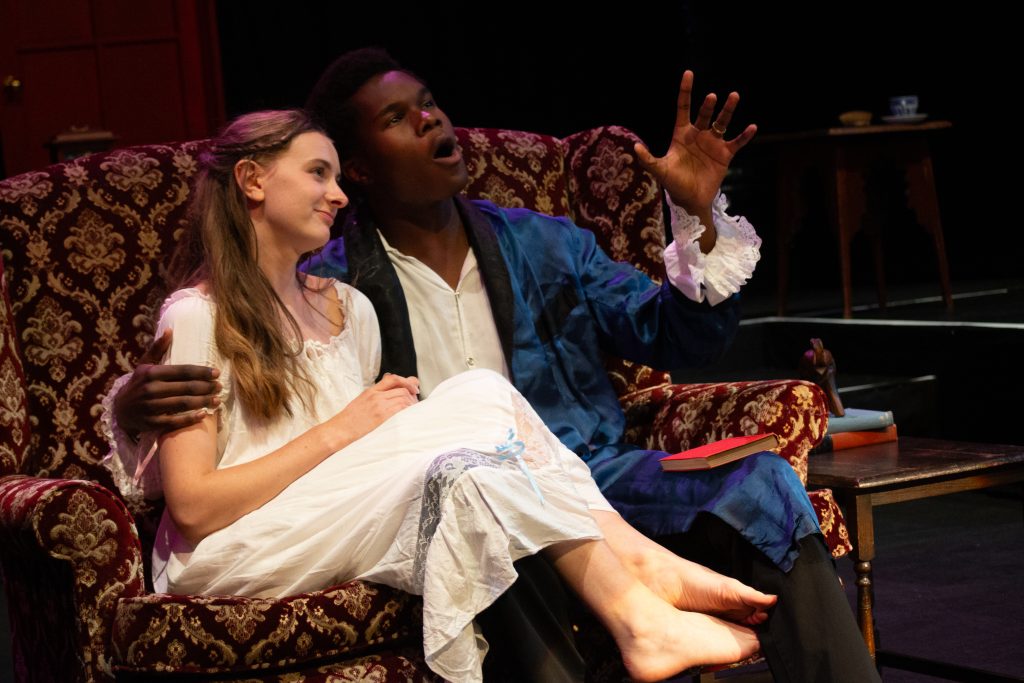
Credit: Mark Todd
When we say the two meet in a bar, that is true, but really there are elements of James’ other stories here too. So here it is like they are having a date but James’ has also brought his kids to play on the ghost slide in the beer garden while the couple decide on a good table red . Without giving too much away, the story is effectively two different eras and stories of people visiting Bly Manor that are tied together with a bloody cord of intrigue. First, there is that of the new Governess who is brought in to care for and instruct Miles (a young man returning from Oxford University) and Flora (Miles’ sister, a literary dreamer) with the housekeeper Mrs. Grose by their side. Second, there is a medley of characters invited to the Manor for a mysterious purpose: Daisy Winterbourne (a bolshy, New Age woman from the USA) James Winterbourne (Daisy’s husband, an adrift sculptor with connections to the house), Isabel Hawthorne (a reporter and author trying to find inspiration), and Owen and Rose Wingrave (a married, financially-struggling couple haunted by their past). The whole story is held together by the whims of the Storyteller, a character whose cutting attire and seriousness make you think he has travelled from Nolan’s “The Prestige”. You might like stage magician-adjacent characters, though how things get later you might prefer the calmer machinations of Paul Daniels instead as Rowinski goes a bit James Mcavoy. As time goes on relationships are formed and broken, tensions arise, and the state of the world is considered.
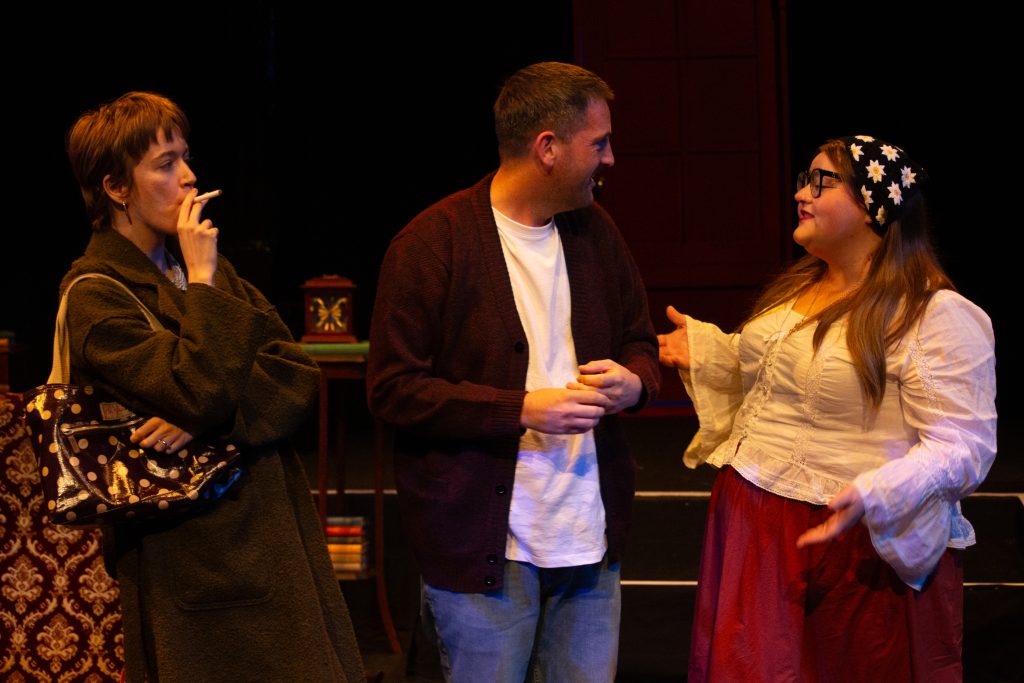
Credit: Mark Todd
What did we think?
There is a lot to enjoy in this stage production. The set itself is pretty cool, lots of oldish furniture, lots of space (more than I remember seeing in The Drama Studio) and some inventive ways in which the past and the present are distinguished (we love the armchairs that become mossy garden rocks). This combined with the lighting does make some tense situations; the centrepiece of the red door (an Insidious reference?) with colour and shadow obscuring the figure within works really well, like raspberry ganache hidden in a chocolate cake.
The story flitters between the two times and this works well, you get a good amount of time with each set of characters for the story to move on in a satisfying way. In terms of feel, the play is strongly supernatural but it has added folk horror elements and at times the set approaches and works with liminal spaces (and even the smallest touch of Lovecraftian Elder vibes). The play sets scenes within those weird grey thresholds that are both real and unreal, and this is aided by the two intervals (rather than classic one). The folk horror is at its best when the skulls come out, the garments become flowing and the brightness of the garden scenes are punctured by the deep voice of terror from the past. The scenes “in-between” are incredibly effective; the spectral forms are chilling, and the tension built from dropped books and scenery manages to be both subtle yet impactful. The costumes helped evoke the atmosphere too.
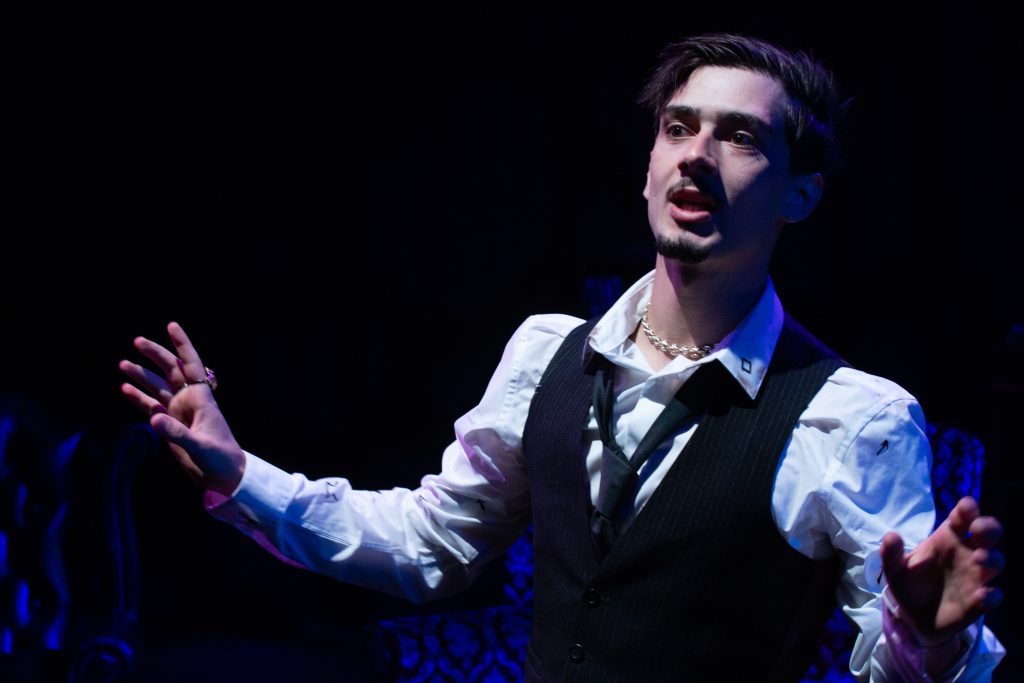
Credit: Mark Todd
Everyone plays their part and there are some great turns here. Each character makes sure to bring with them the rattling of their skeletons in thick, wooden oak cupboards of yonder history. From the past segments there is the strict, religious zealousness of Warman’s Governess. It is a centred and subversive performance, she appears the most grounded of the characters for much of the play and Warman’s performance combines self-belief, moral certainty, and at times, a touch of the unhinged performance. Ladham’s turn as Mrs Grouse is like a wise, knowing goose. While the most matter-of-factly around her peers and “doing what she is told”, her character is played with a backbone, and a kind of warm-gossipy aura. She is an interesting one; you would feel comfortable telling her your darkest hopes and fears but maybe be embarrassed to let slip your favourite jam flavour. Of course the roles of Flora and Miles are key and both are excellent here. Wright’s Flora is whimsical, knowledgeable, and being a free-living cheerleader to the Pagan, anti-establishment thought. She’s like a more modern “Linda Blake” from Blood on Satan’s Claw. Secretive and light, she brings the cheer. Osamudiamen’s Miles is seductive, confident yet troubled. He plays the charm, and injects the needed warmth and manipulation the character demands, he is this play’s Marquis De Carabas (Neverwhere) and is truly fabulous. Together they are magnetic, a force of similar purpose and mind.
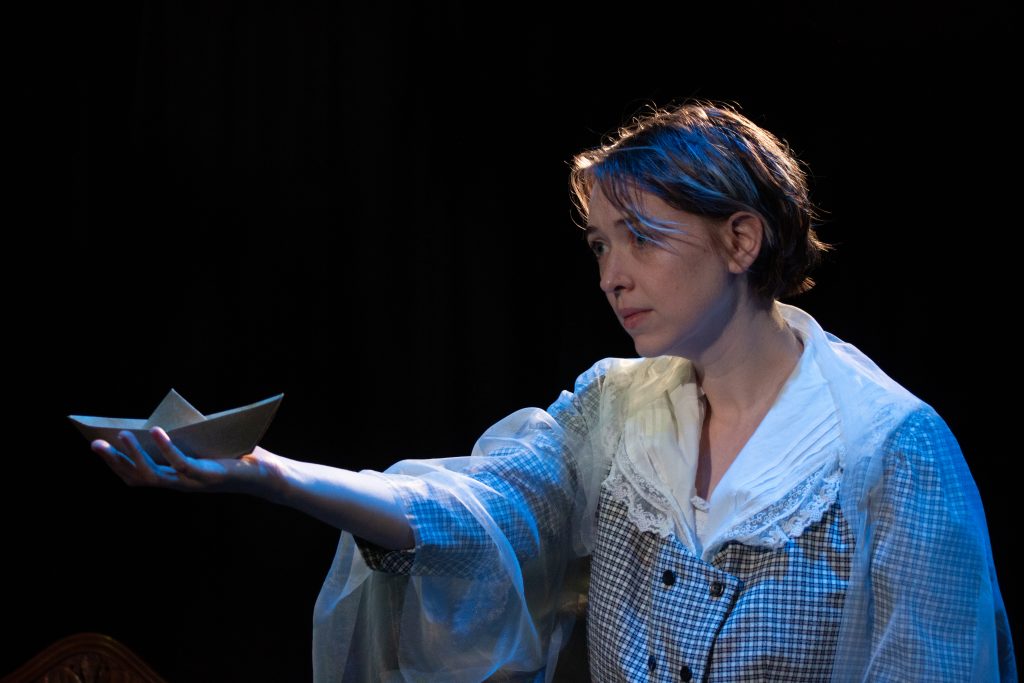
Credit: Mark Todd
In the modern day there is a large cast. Luty’s Isabelle is performed with anguish, literary high-brow and guilt whilst Gregory’s James is self-important in a condescending way to others. They are great in their scenes together with a burning longing, like that small rum hidden in a carved out Bible to a thirsty throat. Young’s Daisy is played incredibly well. She is the obnoxious American who has so much self-belief it makes us Brits shake our heads. Her character is more than that though. Her intoxicated scenes are great and she carries both the facets of self-importance and care well. Like everyone, she gets some good quieter scenes, especially with Isabelle. This brings us to the Wingraves. Both Bickley (Owen) and Grana (Rose) do excellently. Bickley is the comedy element, he has some great lines and is the working class mirror to the other characters. He keeps the laughs going as the horror is beginning to takeoff. Grana is a Rose who is somewhat world-weary and almost defeated, but nevertheless personable and tough. When things are at their worst, she probably gets the best scene and her performance is layered like plywood; outwardly strong, but brittle when forced from a certain emotional direction. We appreciate the work she does here.
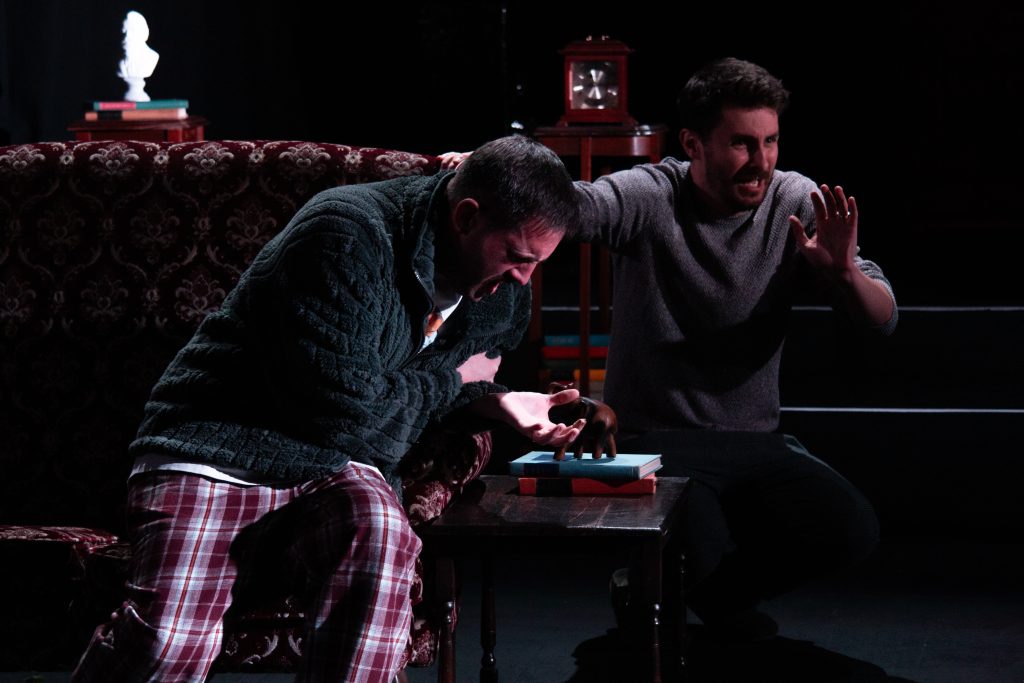
Credit: Mark Todd
As the play progresses the themes become apparent. If you are fans of discussions about wealth, privilege, and the impact of religious dogma, then this is for you. It has a somewhat contemporary feel as the play reaches towards (but doesn’t go massively into) the ideas behind colonialism, and the political philosophy around freedom. Ultimately the power of the past still reaches into the present, especially for certain characters and the variety and portrayal of backstories should be commended. The horror elements build throughout the play and the sound work enhances the unease you have, especially when things appear to be crossing over with themselves. We liked the mix of Supernatural, Gothic and Folk Horror concepts. It leans most to the Supernatural and these elements are done especially well, the Folk Horror elements add some nice distinct icongraphy to proceedings and perfume to the characters’ trauma rather then being the beating dark heart of the play, but this is not bad thing. Most importantly, it does not make the rookie error in Folk Horror of explaining too much to the audiences of what is going on; there is still space in this tapestry for us to sew a wilted rose on to our dark shaw and make our own macabre connections.
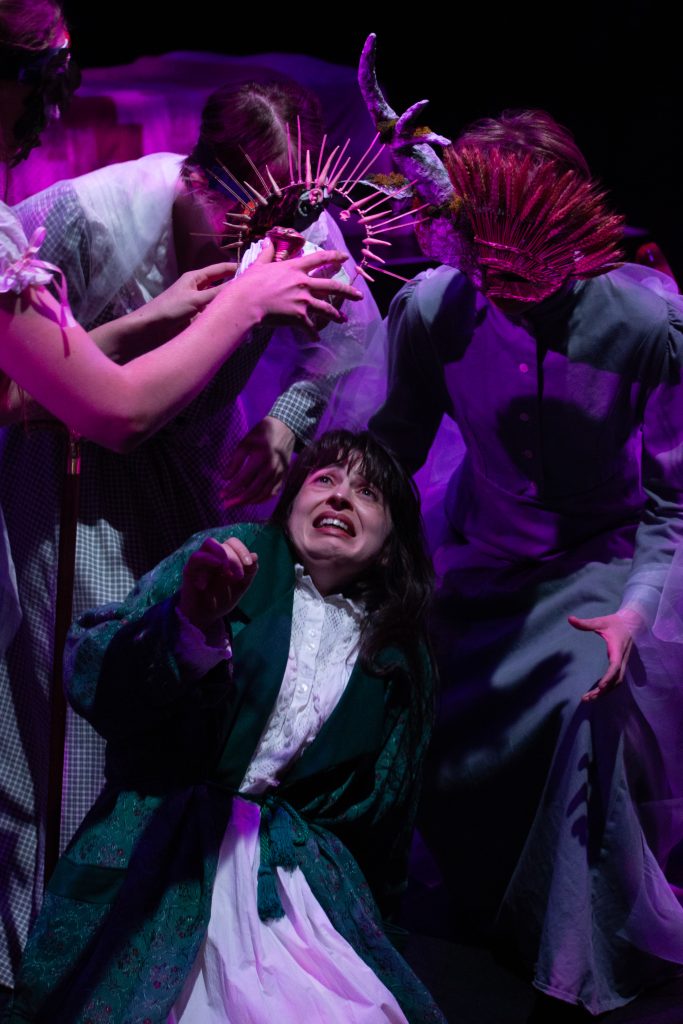
Credit: Mark Todd
So overall, a good experience. It has great characters and acting with writing that gets up you invested in these people’s backstories and these two worlds, these two times. Most of all, it has tensions and chills that grow as things progress, and, for the not so faint-of-heart, a few well-timed jumps here and there. This play is still going until 03/10/26, so get your tickets while you can.
Tickets can be obtained at:
https://www.ticketsource.com/thecompanysheffield/the-turning-at-bly-manor/e-rpzlgd